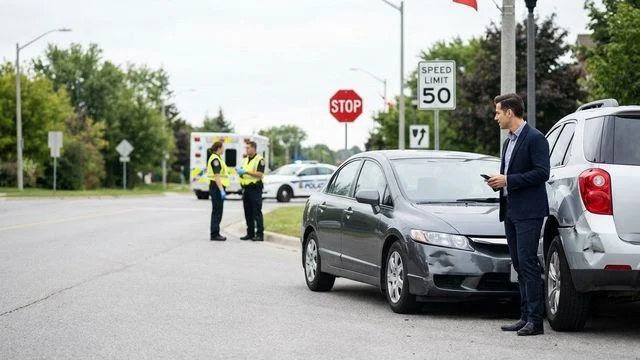
A car accident can leave you dealing with injuries, vehicle damage, insurance paperwork, and missed work all at once. What you do in the hours and days afterward can affect your recovery and your ability to pursue compensation.
If you have been injured in a car accident in Ontario, there are several common mistakes worth avoiding. Here are 10 things you should not do after a collision.
1. Do Not Leave the Accident Scene
You should not leave the scene of a collision without taking the required steps.
If there are injuries or significant property damage, the collision may need to be reported to police. Ontario’s driver’s handbook states that collisions involving injuries or more than $5,000 in damage to vehicles or property must be reported.
If it is safe to do so, remain at the scene, exchange the required information, and follow directions from police or other emergency personnel.
For minor collisions where the vehicles can be safely moved, it is recommended to move them out of traffic when possible.
2. Do Not Ignore Your Injuries
Some injuries are obvious immediately. Others may take hours or days before they become noticeable.
Do not assume that you are fine simply because you can walk away from the accident.
Seek medical attention and tell the healthcare provider about all of your symptoms. Keep track of changes in your condition and follow the treatment recommendations you receive.
Medical records can become important when an insurance company is assessing an accident benefits claim or when you are pursuing compensation for an injury.
3. Do Not Delay Reporting the Accident to Your Insurance Company
If you intend to make an insurance claim, do not simply put off contacting your insurer.
You must contact your automobile insurance company within 7 days of an accident.
Your insurance company may also provide forms and instructions that have to be completed within specific time periods.
If you are unsure what you are being asked to sign or provide, consider getting legal advice before proceeding.
Virk Personal Injury Law help injured people understand their rights when dealing with insurance companies after a motor vehicle accident. Learn more about our car accident lawyers.
4. Do Not Admit Fault at the Scene
After a collision, emotions can run high. Avoid arguing with the other driver or making statements about who caused the accident.
You do not need to determine fault at the roadside.
Provide the required information to police and the other parties, answer questions honestly, and describe what happened without guessing or speculating.
A simple statement such as “I’m sorry” can also be misunderstood when taken out of context. You can be polite without accepting responsibility for the collision.
5. Do Not Forget to Collect Evidence
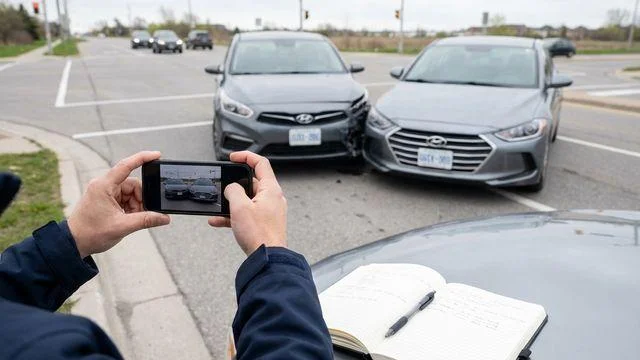
Important evidence can disappear quickly.
If it is safe, take photographs or videos of:
- The vehicles involved
- Vehicle damage
- The position of the vehicles
- Road conditions
- Traffic signs and signals
- Skid marks or debris
- Visible injuries
- The surrounding area
Also collect the names and contact information of witnesses and the insurance and licence information of the other drivers.
It is recommended that you collect information from those involved, getting witness details, and taking photographs when it is safe to do so.
If there is dashcam footage, save it as soon as possible. Do not assume that the recording will remain available indefinitely.
6. Do Not Post About the Accident on Social Media
Be careful about what you post online after a car accident.
Avoid posting:
- Details about who was at fault
- Photos or videos of the accident
- Statements about your injuries
- Comments about your recovery
- Posts about activities that could be misunderstood
- Conversations about your insurance claim or potential lawsuit
Even an innocent post can be taken out of context.
You should also avoid discussing the details of your claim publicly. If you are already involved in a legal dispute, speak with your lawyer before making decisions about potentially relevant online content.
7. Do Not Sign Documents You Do Not Understand
After an accident, you may receive forms from an insurer, repair facility, healthcare provider, or another party.
Do not sign a document simply because someone tells you that it is routine.
Read it carefully and ask questions if you do not understand what you are agreeing to.
You should not sign blank forms in advance of receiving collision-related services or treatment.
If an insurance company asks you to provide a statement, attend an assessment, or sign documents and you are unsure about your rights, getting legal advice can help you understand the request before responding.
8. Do Not Accept a Settlement Without Understanding Your Claim

An early settlement offer may seem attractive when you are facing medical bills, lost income, and other expenses.
Before accepting an offer, make sure you understand what it covers and whether it affects your ability to pursue other compensation.
Depending on the circumstances, an injured person may have rights involving accident benefits as well as a claim for damages.
Ontario accident benefits can include coverage for medical and rehabilitation expenses and, in appropriate cases, income replacement and other benefits.
Once you accept a settlement or sign a release, your ability to pursue additional compensation may be affected.
If you have received a settlement offer after a serious car accident, consider having it reviewed before signing.
9. Do Not Assume You Are Not Entitled to Accident Benefits
You do not necessarily need to prove that another driver was at fault to access Ontario accident benefits.
Accident benefits are designed to provide certain benefits to people injured in motor vehicle accidents, subject to the applicable rules and eligibility requirements. They can include medical and rehabilitation benefits and income replacement benefits.
Virk Personal Injury Law can help you understand which accident benefits may apply to your circumstances.
This can be particularly important if your injuries prevent you from working or require ongoing treatment.
Learn more about income replacement benefits after a car accident.
10. Do Not Wait Too Long to Get Legal Advice
You do not have to wait until your insurance company denies your claim before speaking with a lawyer.
A car accident can involve several issues at the same time, including:
- Accident benefits
- Medical treatment
- Lost income
- Insurance coverage
- Vehicle damage
- Liability
- Long-term injuries
- Claims for compensation
There can also be important deadlines that apply to accident benefits and legal claims.
Getting advice early can help you understand what information to preserve, what documents to review, and what steps need to be taken.
Virk Personal Injury Law offers free consultations for people dealing with serious personal injuries after car accidents.
What Should You Do After a Car Accident in Ontario?
Knowing what not to do is only part of the picture. After a collision, you should generally:
- Check yourself and others for injuries.
- Call emergency services when necessary.
- Stay at the scene and follow your legal obligations.
- Move vehicles out of traffic when it is safe and appropriate.
- Exchange required information.
- Take photographs and collect witness information.
- Seek medical attention for any injuries.
- Notify your insurance company.
- Keep records of medical treatment, expenses, missed work, and communications.
- Get legal advice if you have suffered a serious injury or your insurance claim is disputed.
What Evidence Should You Keep After a Car Accident?
Keep copies of anything connected to the accident and your recovery, including:
- Medical records and treatment information
- Prescription and medication receipts
- Travel and parking expenses
- Repair estimates and invoices
- Insurance correspondence
- Accident benefit forms
- Employment and income-loss records
- Photographs and videos
- Witness information
- Police or collision reports
- Notes about your symptoms and recovery
You can also obtain an Ontario vehicle collision report when one is available. Collision reports can contain information about the drivers, vehicles, road conditions, and circumstances of the collision.
What If the Other Driver Does Not Have Insurance?
An uninsured or unidentified driver does not necessarily mean that you have no options.
Ontario has a Motor Vehicle Accident Claims Fund that can provide a potential source of compensation in certain situations where there is no available insurance, including some uninsured and hit-and-run accidents.
The rules are specific to the circumstances, so legal advice may be appropriate if you have been injured by an uninsured or unidentified driver.
What If Your Injuries Are More Serious Than You Initially Thought?
Do not assume that an accident is a minor matter simply because you initially expected to recover quickly.
Some injuries can affect your ability to work, care for yourself, drive, or participate in normal activities for months or longer.
If your injuries are continuing, your treatment is becoming more extensive, or your ability to work has been affected, speak with your healthcare providers and consider getting legal advice about your options.
Virk Personal Injury Law represents people dealing with serious injuries following motor vehicle accidents across Ontario.
Frequently Asked Questions
What should I not say after a car accident?
Avoid admitting fault or speculating about what caused the accident. Be honest when answering questions, but limit your comments to what you know. You do not need to determine fault at the accident scene.
Should I talk to the insurance company after a car accident?
You should report the accident to your insurer as required, but you should understand what you are being asked to provide. If you are seriously injured or have concerns about your claim, consider getting legal advice before giving detailed statements or signing documents.
Should I see a doctor after a car accident if I feel fine?
If you develop symptoms or have concerns about an injury, seek medical attention. Some accident-related symptoms may not be immediately obvious. Tell your healthcare provider about the collision and any symptoms you experience.
How long do I have to report a car accident in Ontario?
The applicable reporting and claim deadlines can depend on the circumstances. Ontario requires certain collisions to be reported to police, including collisions involving injuries or more than $5,000 in damage to vehicles or property.
You must report the accident to your automobile insurance company within 7 days of the accident.
Can I still make a claim if the accident was partly my fault?
Potentially, yes. Fault and entitlement to compensation can depend on the facts of the collision and the type of claim being made. Do not assume that being partly responsible automatically prevents you from making a claim.
Do I need a lawyer after a car accident in Ontario?
Not every collision requires legal representation. However, legal advice can be particularly useful if you have suffered significant injuries, cannot work, are dealing with a denied or disputed insurance claim, or are being asked to accept a settlement.
Talk to a Car Accident Lawyer at Virk Personal Injury Law
A car accident can create problems that extend well beyond vehicle repairs. If you have been injured, you may also be dealing with medical treatment, lost income, insurance claims, and uncertainty about what happens next.
Virk Personal Injury Law helps injured people understand their rights and deal with insurance companies after serious motor vehicle accidents.
If you have been injured in a car accident in Ontario, contact Virk Personal Injury Law for a free consultation.