
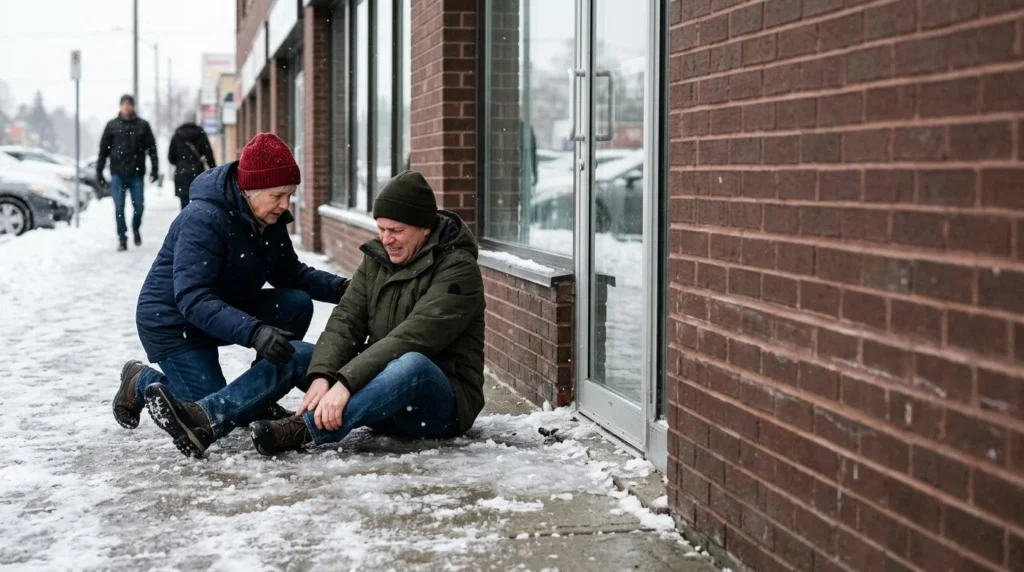
A slip and fall can cause serious injuries, medical expenses and time away from work. In Ontario, you may have a legal claim if an unsafe condition caused your fall and the person responsible for the property failed to take reasonable care to keep it safe.
Ontario’s Occupiers’ Liability Act sets out the duty of occupiers to take reasonable care to keep people entering their premises reasonably safe. Whether you have a claim depends on the cause of the fall, who controlled the property, what they knew or should have known, what precautions they took and whether procedures were followed as well as the injuries and losses you suffered.
When Does a Slip and Fall Give You a Claim in Ontario?
A slip and fall accident in Ontario may lead to a legal claim when:
- A dangerous condition existed on the property.
- The person responsible for the property knew or should reasonably have known about it.
- Reasonable steps were not taken to remove the hazard, fix it or warn people.
- The condition caused your fall and injury.
- You suffered financial or other losses because of the injury.
Common hazards include wet floors, spilled liquids, snow and ice, broken flooring, uneven surfaces, damaged stairs, loose mats and poor lighting.
A fall on someone else’s property does not automatically make the owner or occupier legally responsible. The circumstances surrounding the hazard must be examined.
Under Ontario’s Occupiers’ Liability Act, an occupier can be a property owner, tenant or another person who has responsibility and control over the condition of the premises or the activities taking place there.
What You Have to Prove in a Slip and Fall Claim
The Hazard Caused the Fall
You need to identify what caused the accident. This might be ice, water, defective flooring, an uneven surface or another hazard.
Photos, witness statements and surveillance footage can help establish what was present when you fell.
The Occupier Knew or Should Have Known
An occupier may have actual knowledge of a hazard, such as when an employee is told about a spill.
In other situations, the issue may be whether reasonable inspections should have discovered the condition before the accident.
Reasonable Steps Were Not Taken
The law does not require property owners to guarantee that nobody will ever fall. The question is whether reasonable care was taken in the circumstances.
Depending on the situation, reasonable precautions may include:
- Inspecting the property
- Cleaning spills
- Repairing damaged surfaces
- Removing snow and ice
- Applying salt or other treatment
- Providing adequate lighting
- Warning visitors about a known hazard
You Suffered an Injury
Medical records can help document the injury and connect it to the accident. Your claim may also involve the effect of the injury on your work, daily activities and future needs.
Who May Be Responsible for a Slip and Fall?
The property owner is not always the only potentially responsible party.
Stores and Businesses
Stores, restaurants and shopping centres may have responsibilities for areas used by customers. Inspection records, cleaning logs, employee reports and security footage can be important evidence.
Condos and Apartment Buildings
Depending on where the accident occurred, responsibility may involve a condominium corporation, landlord, property manager or maintenance company.
Property Owners and Landlords
Responsibility depends on possession, control and maintenance duties. Ontario law also contains rules dealing with landlords who have obligations to repair or maintain rented premises.
Municipal Sidewalks
Falls on municipal sidewalks are subject to specific rules under the Municipal Act, 2001. Municipal liability for snow and ice can be limited, and special notice requirements may apply.
Snow Removal Contractors
A property owner or occupier may hire a contractor to remove snow or ice. The contractor’s work and the agreement between the parties may be relevant when determining responsibility.
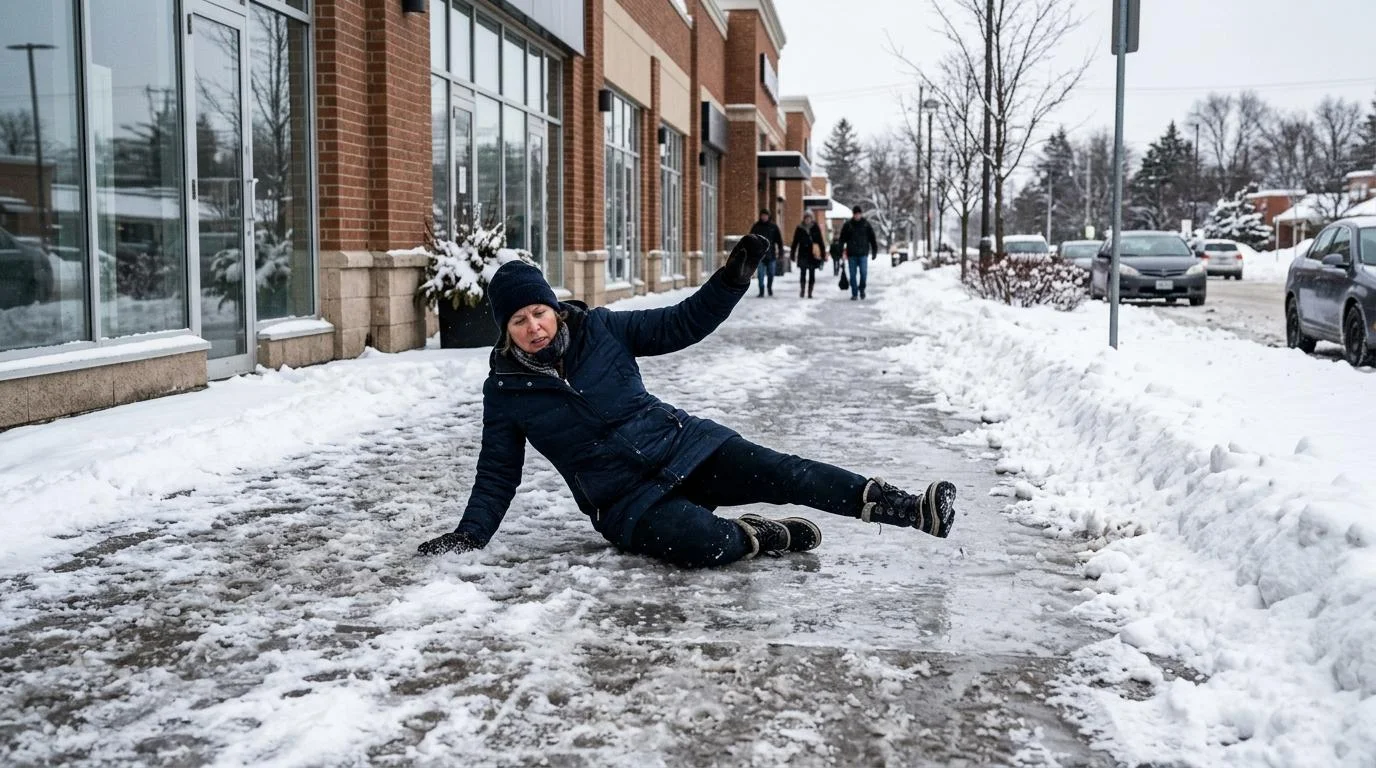
Ice and Winter Slip and Fall Accidents
Winter conditions can create hazards such as:
- Snow
- Black ice
- Freezing rain
- Refrozen slush
- Ice buildup
- Poorly cleared walkways
Slipping on ice does not automatically establish liability. The circumstances of the property, maintenance practices and steps taken to address the hazard must be considered.
The 60-Day Notice Requirement
For certain snow and ice injury claims under Ontario’s Occupiers’ Liability Act, written notice generally must be given within 60 days of the injury. The notice must include the date, time and location of the accident.
The legislation provides limited exceptions where a court finds a reasonable excuse for late notice and determines that the defendant has not been prejudiced.
Municipal Sidewalk Falls
Different rules apply to certain municipal claims. Under the Municipal Act, 2001, written notice generally must be provided to the municipal clerk within 10 days of an injury caused by a condition of a sidewalk or highway, subject to statutory exceptions.
These notice periods are separate from the general limitation period, so an injured person should not wait before getting legal advice.
Evidence to Collect After a Slip and Fall
Evidence can disappear quickly. Ice melts, spills are cleaned and damaged surfaces may be repaired.
Take Photos and Videos
Photograph:
- The exact location of the fall
- The hazard
- The surrounding area
- Warning signs
- Lighting
- Snow or ice
- Damaged flooring or pavement along with measurements of the discrepancy with a level and measuring tape
Take both close-up and wider photographs.
Keep Your Shoes and Clothing
Keep the footwear and clothing you were wearing when you fell. Do not throw them away or alter them unnecessarily.
Report the Accident
Tell the property manager, store manager, landlord or another responsible person about the accident. Record who you spoke with and when.
Identify Witnesses
Get the names and contact information of anyone who saw the fall or the condition that caused it.
Seek Medical Attention
Keep records of:
- Medical appointments
- Treatment
- Prescriptions
- Rehabilitation
- Receipts
- Transportation costs
- Other accident-related expenses
Preserve Surveillance Footage
Security footage may be valuable evidence, but many systems overwrite recordings after a limited period. Identifying relevant cameras and taking steps to preserve footage can be important.
Deadlines for Slip and Fall Claims in Ontario
Slip and fall claims can involve several different deadlines.
| Situation | Potential deadline |
| General civil claim | Generally 2 years from discovery |
| Certain snow and ice claims | Generally 60 days for written notice |
| Certain municipal claims | Generally 10 days for written notice |
Under Ontario’s Limitations Act, 2002, the basic limitation period for many civil claims is generally two years from when the claim was discovered.
However, the general two-year period does not replace shorter notice requirements. Certain snow and ice claims and municipal claims can require much earlier notice.
Other rules may apply depending on the circumstances, including claims involving minors or people who lack legal capacity.
What Compensation Can Include
The compensation available depends on the injuries and losses caused by the accident.
Depending on the circumstances, a slip and fall claim may include:
- Medical expenses
- Rehabilitation costs
- Prescription expenses
- Lost income
- Loss of future earning capacity
- Transportation costs
- Household assistance
- Other out-of-pocket expenses
- Pain and suffering
There is no fixed settlement amount for every slip and fall. The value of a claim depends on liability, the severity of the injuries, medical evidence and the effect of the injury on your work and daily life.
Mistakes to Avoid After a Slip and Fall
Failing to Report the Accident
Report the accident as soon as reasonably possible and keep a record of the report.
Not Photographing the Hazard
The condition may disappear quickly. Photographs can preserve important evidence.
Delaying Medical Treatment
If you are injured, seek appropriate medical care and follow the recommended treatment.
Throwing Away Your Shoes
Keep the shoes and clothing you were wearing when the accident occurred.
Assuming the Property Owner Is Automatically Responsible
A fall on another person’s property does not automatically establish liability. The circumstances must be investigated.
Not getting witness information
It is important to obtain the contact information of any witnesses to the fall.
Settling Too Early
Some injuries take time to diagnose and treat. Consider the full impact of an injury before accepting a settlement.
Missing a Notice Deadline
Short notice periods can apply to snow and ice and municipal claims. Missing a deadline can create serious problems for a potential claim.
FAQ
Do I have a slip and fall claim in Ontario?
You may have a claim if an unsafe condition caused your injury and the person responsible for the property failed to take reasonable care.
The cause of the fall, the condition of the property, who controlled the area, what they knew or should have known, and the injuries you suffered all matter.
How do I prove that a property owner was responsible for my fall?
Useful evidence can include photographs, witness information, incident reports, surveillance footage, inspection records, maintenance records and medical documentation.
The investigation may need to establish what caused the fall, whether the responsible party knew or should have known about the hazard, and whether reasonable precautions were taken.
Who is responsible for a slip and fall on an icy sidewalk?
It depends on whether the sidewalk is municipal or privately controlled and who was responsible for maintaining it.
Municipal sidewalks are subject to specific rules under the Municipal Act, 2001. Private properties may involve an owner, occupier, property manager or snow removal contractor.
How long do I have to make a slip and fall claim in Ontario?
Many civil claims have a general two-year limitation period, but shorter notice requirements can apply.
Certain snow and ice claims generally require written notice within 60 days, while certain municipal claims can require notice within 10 days.
Because different rules can apply, do not assume that you have two years to deal with every part of your claim.
How much compensation can I receive for a slip and fall?
There is no fixed amount. Compensation depends on several factors including: the severity of the injury, medical treatment, lost income, future limitations, expenses and the overall effect of the injury.
Speak With a Slip and Fall Lawyer in Ontario
If you were injured in a slip and fall, Virk Personal Injury Law can review the circumstances of your accident, the available evidence and the deadlines that may apply.
Contact Virk Personal Injury Law to discuss your injury and legal options.